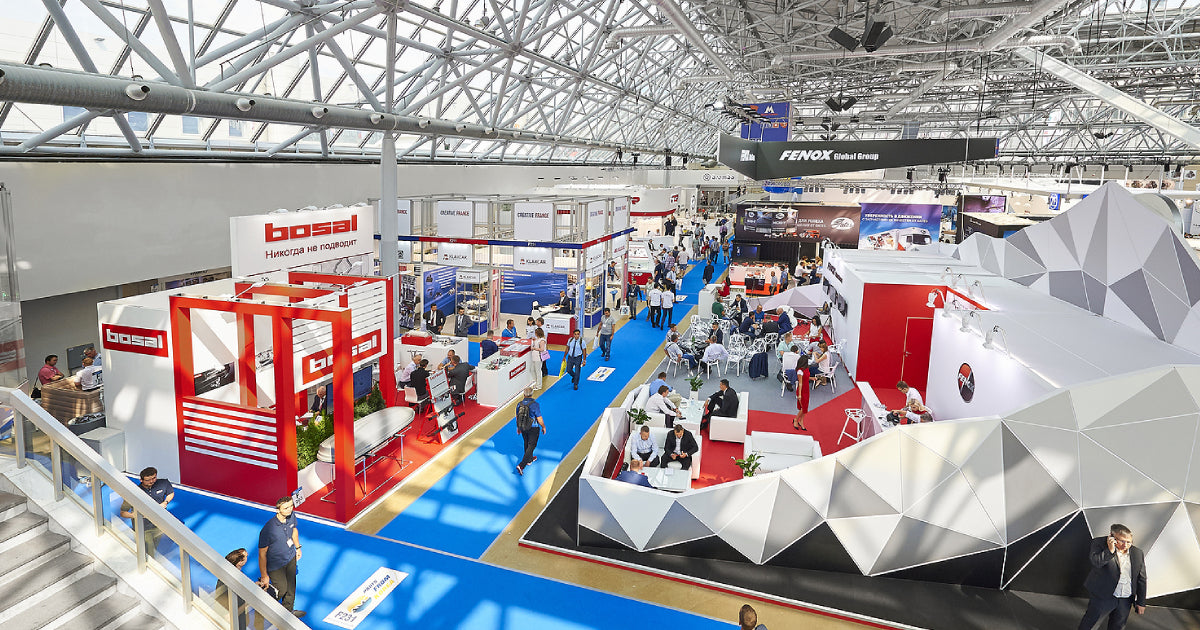

Exhibitions and trade shows are significant investments. You are competing for attention in a crowded space, and every element of your display needs to work hard for your brand. The materials you choose, the way your stand is constructed, and how well it holds together under event conditions can make a real difference to the impression you leave.
Cardboard display stands have come a long way from the flimsy flat-pack structures you might remember. Today, they are a serious option for brands that want something well-made, visually impactful, and kinder to the planet.
Why More Brands Are Making the Switch
The shift towards sustainable event materials is not just a trend. It reflects a genuine change in how organisations think about their environmental footprint, and exhibitions are no exception. For brands looking to lead in sustainable exhibition design, cardboard is an increasingly compelling choice, and not just for environmental reasons.
Beyond the environmental case, cardboard stands are also genuinely practical. They are relatively quick to produce, straightforward to set up without specialist tools, and easy to transport, all of which makes life considerably easier for event teams already juggling a hundred other priorities.
Getting Clear on What You Actually Need
Before you even begin looking at suppliers, it is worth spending time understanding the stand's targets. This sounds obvious, but many people skip it in the rush of event planning, and it tends to cause problems later.
Think about the purpose of the stand. Is it primarily a visual display, something people will walk past and notice? Or is it an interactive point where attendees stop, pick up items, and engage with your brand up close? Is it a standalone centrepiece or one element within a larger exhibition setup? The answers to these questions will shape every decision that follows, from the dimensions and configuration to how the surface area is used.
Understanding the Different Configurations Available
Cardboard display stands are not a one-size-fits-all product, and understanding the range of configurations available will help you brief far more effectively.
Some stands are designed primarily as tall vertical structures that maximise visual presence from a distance. Others are lower, counter-style units intended for product display or staffed interaction. Panel arrangements allow for modular setups that can be adapted to different spaces or combined into larger installations. Some configurations incorporate features like shelving, display pockets, or integrated signage areas.
Knowing roughly which configuration suits your needs before you speak to a supplier will save a significant amount of back-and-forth and help you get to a meaningful proposal more quickly.
What to Prepare Before You Brief a Supplier
The quality of what you receive is directly linked to the quality of the brief you provide. Vague briefs produce generic results. Coming prepared with the right information makes the whole process faster, smoother, and more likely to produce something you are genuinely happy with.
Useful things to have ready before you reach out:
- Your brand guidelines, including logo files in high-resolution formats
- The dimensions of the space you are working with at the venue
- Any specific functional requirements, such as the need to display products or incorporate printed inserts
- Your event date and the lead time you are working with
- Reference images or examples of displays you admire
You do not need to have all the answers, but the more context you can give, the better placed a supplier is to guide you towards the right solution.
Print Quality Matters More Than You Might Think
The visual quality of your display stand goes beyond the design. Print quality, colour accuracy, and surface finish all play a significant role in how the final product reads in person, and this is something worth asking about directly when you are evaluating suppliers.
Request a physical proof or sample before committing to a full production run. This is the only reliable way to see how your brand colours will appear on the material, and how the finished surface will look under exhibition lighting. It is a step that adds a little time to the process but consistently saves disappointment on the day.
Assembly and On-the-Day Logistics
If you or your team will be setting up the stand yourselves, it is worth asking detailed questions about the assembly process before you order. How long does it take? Are any tools required? Does it need more than one person to put together safely?
Well-engineered cardboard structures are typically designed with ease of assembly in mind, but the experience can vary considerably between suppliers. For large-scale or complex configurations, asking for assembly instructions or even a demonstration in advance is entirely reasonable, and any reputable supplier should be happy to provide this.
Lead Times and When to Place Your Order
Cardboard display stands can be produced more quickly than many traditional exhibition materials, but this should not be taken as an excuse to leave the order late. Custom sizing, bespoke print work, and the proofing process all take time, and compressing the production schedule is where quality tends to suffer.
Place your order as early as you can. This gives your supplier room to work without rushing, and it gives you the time to review proofs properly and request changes without the pressure of a looming deadline.
Thinking Beyond a Single Event
One question worth raising before you finalise your order is how the stand will hold up over time. Can it be disassembled, flat-packed, and stored between events without losing its structural integrity? Will it survive multiple uses and still look the part?
For brands that attend several exhibitions a year, reusability significantly affects the overall cost and environmental value of the investment. A well-made cardboard display stand, stored correctly, can represent excellent value across multiple events.
Ready to Get Started?
Ordering the right cardboard display stand comes down to being prepared, asking the right questions, and choosing a supplier who takes quality seriously at every stage of the process.
If you are looking for bespoke cardboard display stands built with real care and craftsmanship, Paper Carpenter creates custom structures for corporate launches, exhibitions, and promotional events.
To learn more, do not hesitate to get in touch with us.